Did you know you have a “magic switch” inside your body that can turn off stress?
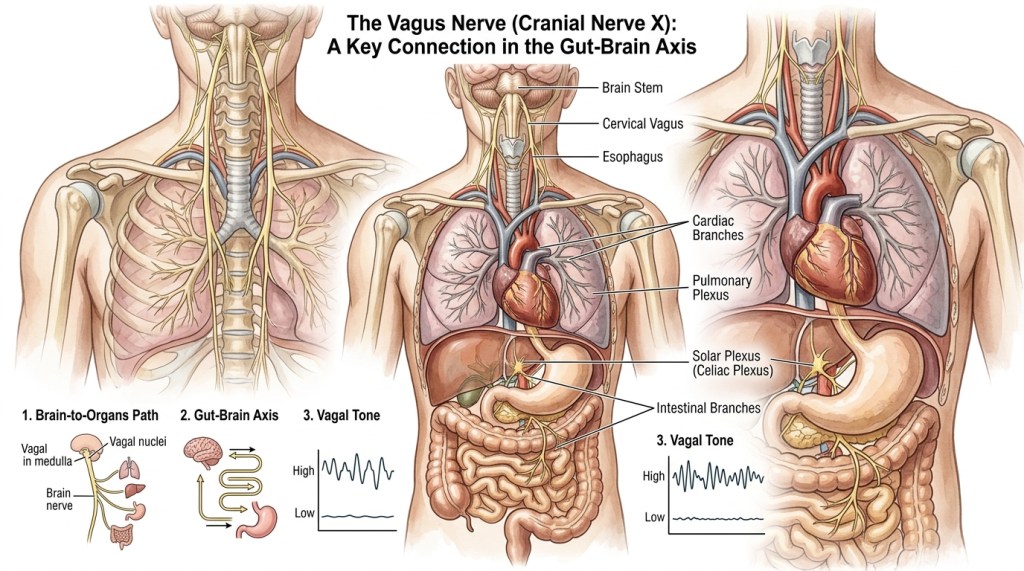
As an emotional success coach, breath coach, certified yoga instructor, and clinical hypnotherapist, I help people find this switch to stop bad habits and feel brave. It is called the vagus nerve.
What is High Vagal Tone?
The vagus nerve is the longest nerve in your body. It connects your brain to your heart, lungs, and stomach. This is called the gut-brain axis. When this nerve is strong, we say you have high vagal tone.
According to peer-reviewed studies in journals like Frontiers in Psychology, people with high vagal tone have better mental well-being. They can stay calm during hard times and bounce back faster from stress.
From “Survival” to “Repair”
Most of the time, stress puts us in Sympathetic Mode. This is “survival mode.” It feels like your body has its foot on the gas pedal. Your heart beats fast, and you might feel scared or angry.
By focusing on your breath, you can shift to Parasympathetic Mode. This is “repair mode.” This is the “brake pedal.” It tells your body it is safe to:
- Digest food better.
- Build a stronger immune system.
- Sleep deeply.
- Think clearly.
When you are in this state, your body can finally:
- Enhance digestion and boost your immunity.
- Improve sleep so you wake up refreshed.
- Regulate emotions so you feel in control.
- Increase focus and concentration.
The Power of the “Bee Breath”
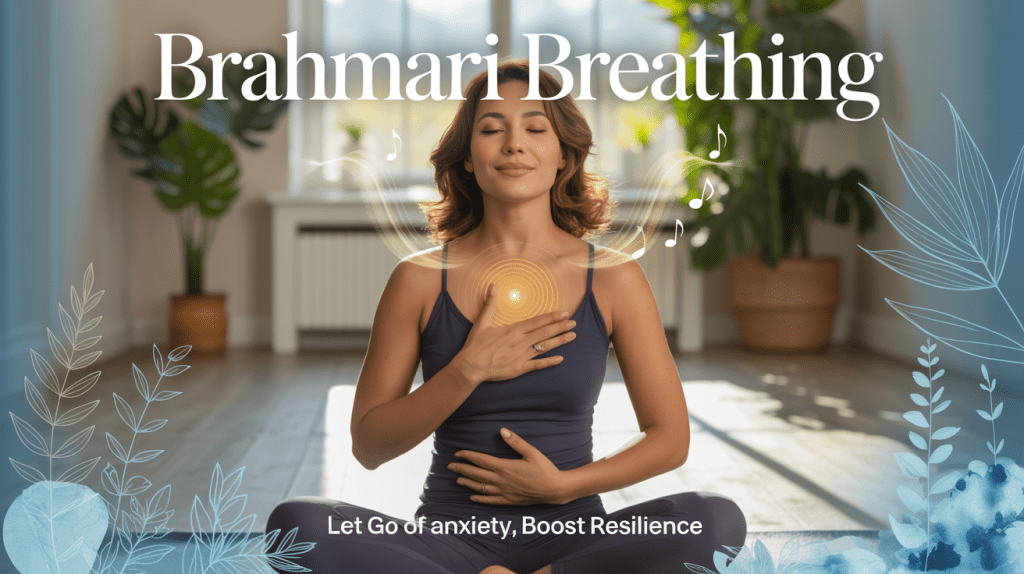
One of the best ways to wake up this nerve is with Brahmari, or “Bee Breath.” To do this, you take a deep breath and make a humming sound like a bee as you exhale.
This works because the vagus nerve passes through your throat (the larynx and pharynx). The humming vibration hits the nerve directly!
It sends a signal to your brain that says, “We are safe.”
The “Overlooked” Secret: Connection
It isn’t just about breathing. Connection is a huge factor in vagal health. Simple things like:
- Genuine laughter.
- Making eye contact with a friend.
- Feeling understood by someone you trust.
These social moments activate the vagal pathway just as much as deep breathing does!
Listen to Your Body
People often say, “Listen to your body.” This means paying attention to your breath. We all have a built-in vagus nerve stimulator.
It is our breath! When you slow your breathing down, you are taking charge of your own health. You are releasing stress and choosing overall well-being.
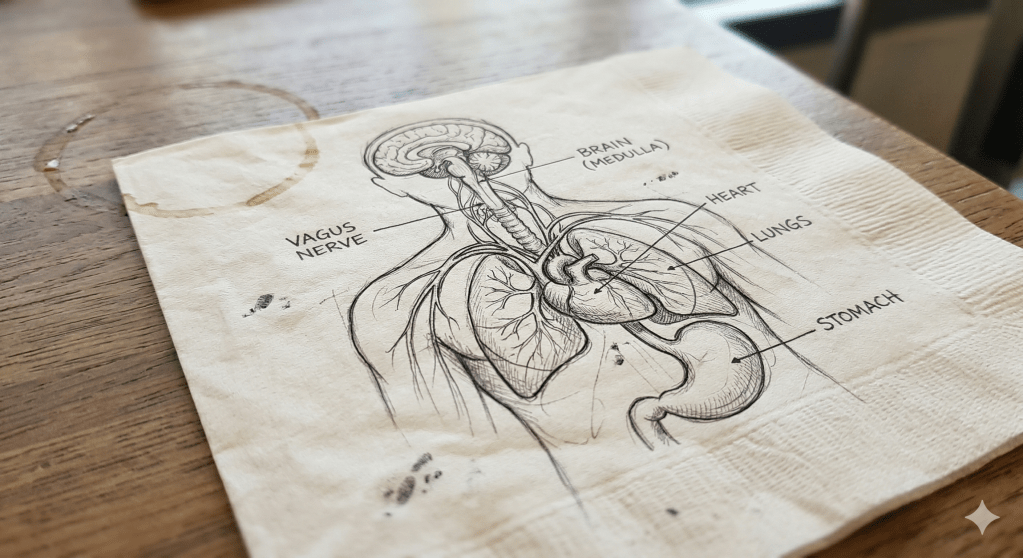
Start Today. Start Living Now!
You don’t need fancy tools to lower your stress.
You just need your breath.
High vagal tone leads to better sleep, better mood, and a happier life.
Regular Bhramari practice promotes parasympathetic dominance, reducing stress, anxiety, depressive symptoms, and improving sleep and cognitive performance — with cardiovascular benefits including lowered blood pressure, heart rate, and improved heart rate variability.
Bandara, N. (2021). Effect of yoga pranayama (breathing techniques) on the vagus nerve in countering major depression and related ailments: A literature review. International Journal of Current Science Research and Review, 4(10), 1270–1278. https://doi.org/10.47191/ijcsrr/V4-i10-12
Chaturvedi, P., Padhar, B. K., & Devi, D. (2025). Therapeutic role of Bhramari pranayama in sleep regulation: A comprehensive review. International Journal of Ayurveda360, 1(6), 549–557. https://doi.org/10.63247/3048-7390.vol.1.issue6.13
Bhramari (humming) generates the lowest stress index compared to physical activity, emotional stress, and even sleep, and a regular daily humming routine can enhance the parasympathetic nervous system and slow down sympathetic activation. https://pmc.ncbi.nlm.nih.gov/articles/PMC10182780/
During extended voluntary expiration in pranayama, the increased baroreceptor discharge inhibits vasoconstrictor nerves and excites vagal innervation of the heart — the mechanism responsible for the observed drops in blood pressure and heart rate.
 Enlighten Embody Empower Yourself
Leave a comment